Faith, Freedom and the Executive Pen: Trump's Religious Liberty Record
On this page
Donald Trump put pen to paper. Across his first term and the opening months of his second, he signed executive actions addressing religious liberty.
Here is what those orders directed, alongside the record of his Supreme Court appointments and Jerusalem decision. The primary sources are linked below.
2017: "Promoting Free Speech and Religious Liberty"
On May 4, 2017, the National Day of Prayer, President Trump signed Executive Order 13798, "Promoting Free Speech and Religious Liberty." It declared that it "shall be the policy of the executive branch to vigorously enforce Federal law's robust protections for religious freedom."
Section 2 directed Treasury, within existing law, not to penalize religious speech on moral or political issues when comparable speech was not ordinarily treated as participation or intervention in a candidate's campaign. That condition matters: the order did not grant a blanket exemption from campaign-intervention restrictions.
Section 3 directed Treasury, Labor and Health and Human Services to consider regulatory changes addressing conscience-based objections to the preventive-care mandate.
2017: Recognizing Jerusalem as Israel's capital
On December 6, 2017, President Trump formally recognized Jerusalem as the capital of Israel and directed the State Department to begin moving the U.S. Embassy there. Congress had adopted the Jerusalem Embassy Act of 1995, which called for recognition and an embassy move.
In his statement that day, Trump said: "Today, I am delivering." The U.S. Embassy in Jerusalem opened on May 14, 2018.
For us, this was more than a foreign-policy footnote. It was a promise kept.
The Court
In his first term, Trump appointed three Supreme Court justices: Neil Gorsuch, Brett Kavanaugh and Amy Coney Barrett. All three joined Justice Samuel Alito's majority opinion in Dobbs v. Jackson Women's Health Organization, decided June 24, 2022. The opinion overturned Roe v. Wade and Planned Parenthood v. Casey, holding that the Constitution does not confer a right to abortion and returning regulatory authority to the people and their elected representatives.
Together with Alito and Justice Clarence Thomas, Trump's appointees formed the five-justice majority for that opinion.
2025: Rooting out anti-Christian bias
Back in office for his second term, Trump moved fast. On February 6, 2025, he signed an executive order titled "Eradicating Anti-Christian Bias."
The order established a Justice Department task force chaired by the Attorney General. It directed the task force to review the previous administration's agency activities, identify any unlawful anti-Christian policies or conduct, and recommend remedies to the relevant agency heads.
2025: The White House Faith Office
The very next day, February 7, 2025, Trump signed an order establishing the White House Faith Office within the Executive Office of the President, housed in the Domestic Policy Council.
The order assigned the office responsibility for helping faith-based groups, community organizations and houses of worship serve families and communities. Its listed functions included policy recommendations, assistance with access to federal grants, and support for agency training on religious-liberty exceptions and accommodations.
2025: The Religious Liberty Commission
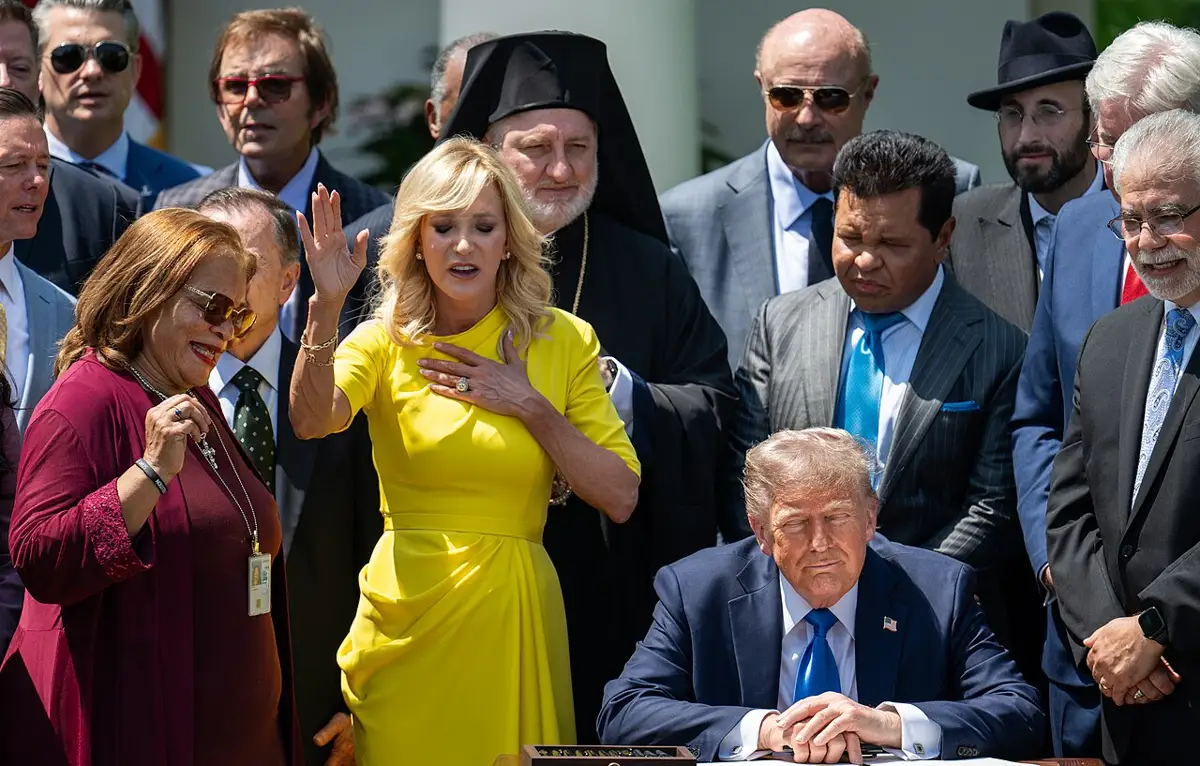
On May 1, 2025, the National Day of Prayer once again, Trump signed an order establishing the Religious Liberty Commission during a Rose Garden event. The photo at the top of this article is from that event.
The order itself looked back at the first-term record, noting that Executive Order 13798 was issued on May 4, 2017. In its May 1 announcement, the White House named Texas Lieutenant Governor Dan Patrick as the commission's chair. The order tasked the commission with reporting on religious liberty's foundations, its impact on American society, threats to it, and strategies to protect it, as well as programs to increase awareness of religious pluralism.
Our view of the record
You can argue about policy all day long. But look at the pattern:
- He signed religious-liberty orders on the National Day of Prayer.
- He recognized Jerusalem as Israel's capital and moved the U.S. Embassy there.
- He appointed three justices who joined the opinion overturning Roe.
- He created an office and a commission with religious-liberty responsibilities.
The published prepared text of his 2017 inaugural address says: "We will be protected by the great men and women of our military and law enforcement and, most importantly, we are protected by God." It also quotes the Bible: "how good and pleasant it is when God's people live together in unity."
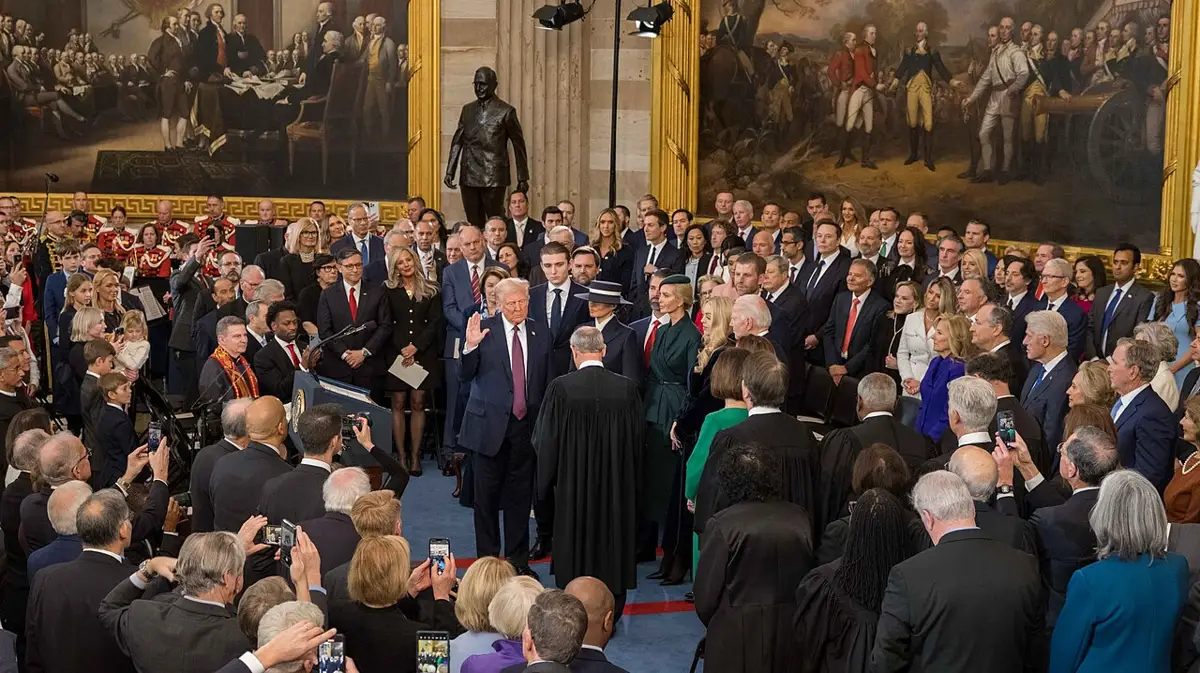
In his January 20, 2025 inaugural address, after Butler, he told the nation that he "was saved by God to make America great again."
A word to the faithful
We know who our Savior is. Christ alone saves. But we also know that God uses leaders, and that believers are called to pray for those in authority. We think the record speaks for itself: when it came to protecting the right to worship, preach and live by conscience, Donald Trump didn't just talk. He signed.
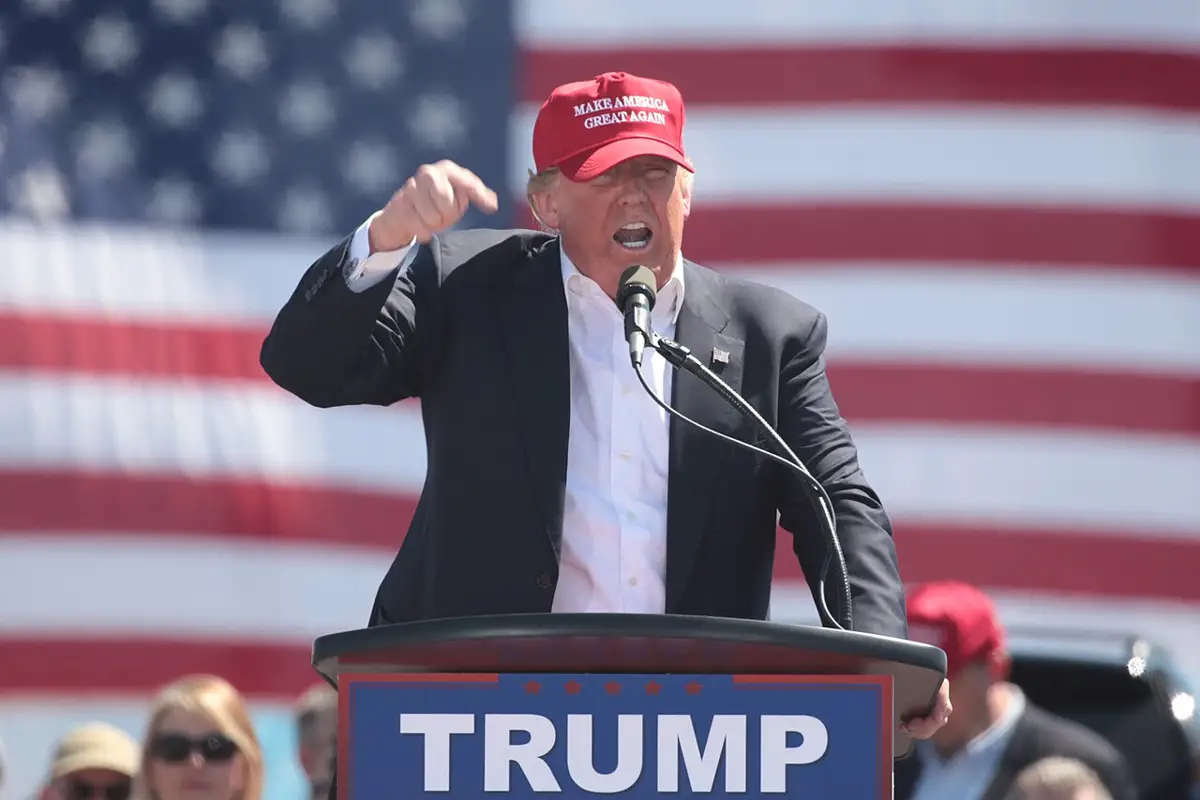
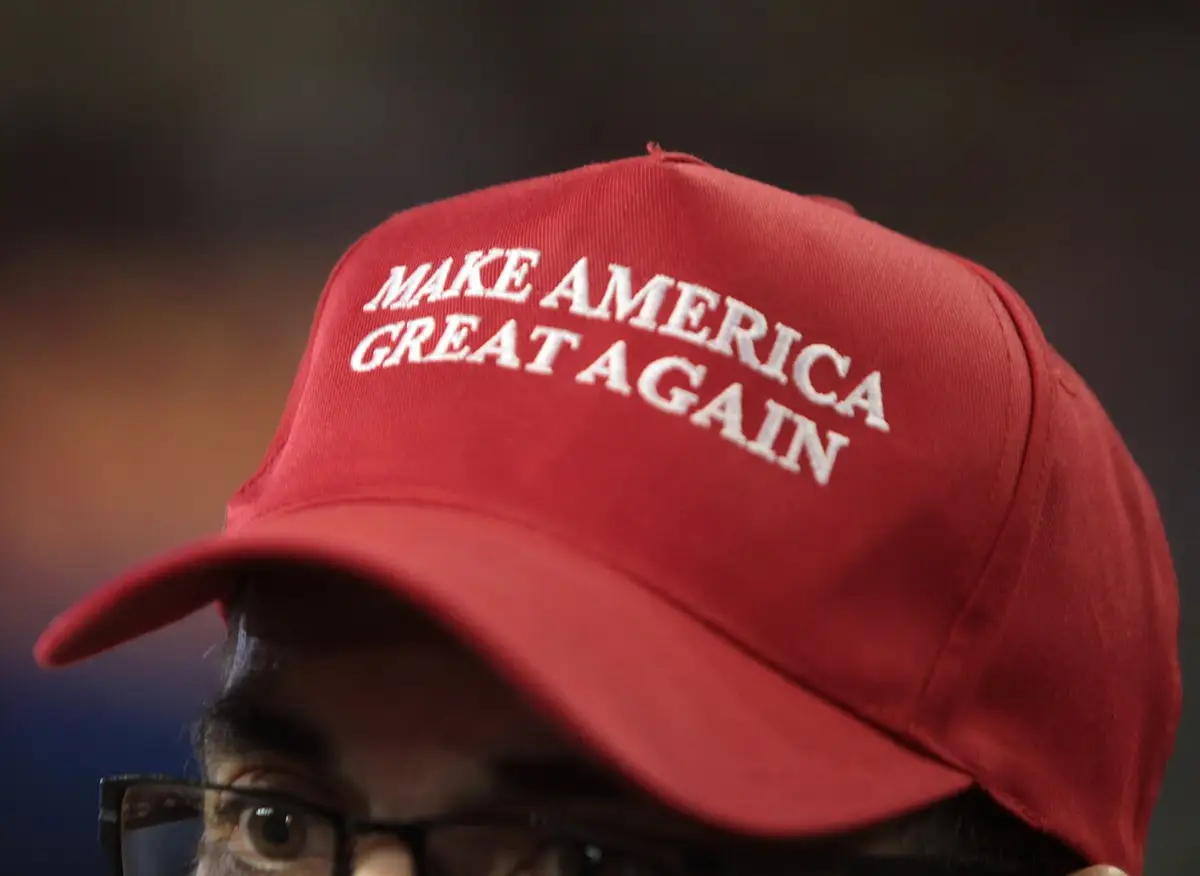
That's worth a little gratitude. And maybe a shirt.
Read the orders yourself. Every source is linked below.
Sources
- Trump White House Archives, The Inaugural Address, prepared remarks (January 20, 2017)
- The White House, The Inaugural Address (January 20, 2025)
- Trump White House Archives, Executive Order 13798, Promoting Free Speech and Religious Liberty (May 4, 2017)
- Trump White House Archives, National Day of Prayer proclamation (May 4, 2017)
- U.S. Government Publishing Office, Jerusalem Embassy Act of 1995, Public Law 104-45
- Trump White House Archives, Statement by President Trump on Jerusalem (December 6, 2017)
- Trump White House Archives, U.S. Embassy opening in Jerusalem (May 14, 2018)
- Supreme Court of the United States, Justices 1789 to Present
- Supreme Court of the United States, Dobbs v. Jackson Women's Health Organization, opinion (June 24, 2022)
- The White House, Eradicating Anti-Christian Bias (February 6, 2025)
- The White House, Establishment of the White House Faith Office (February 7, 2025)
- The White House, Establishment of the Religious Liberty Commission (May 1, 2025)
- The White House, Religious Liberty Commission members announced (May 1, 2025)